


Tarps and Tent Floors in a Snowtrekker Tent
 One question we are asked fairly often, especially by people just getting into the hot tent world, is why we don’t put floors in our tents, and the follow up: what do you do for a floor.
The answer to the first question is very easy. Our tents are designed for function above all else and not having a sewn in floor makes them significantly easier to set up quickly and easily, as well as keep clean and tidy. If your floor is not permanently attached to your tent when you set up it is much easier and faster to pull the shell of your tent over the frame. When you break camp and take your tent down, all the dirt and debris from your stove and going in and out of the tent is left on your tarp and not inside of your tent. Shake off the tarp and you are clean and good to go again. Simple, easy, and effective- no struggling inside of a tent trying to get the frame in place and no sweeping the inside or shaking the tent out every time you take your tent down.
We are also in the process of patterning a ground tarp that will attach into the base of our tents using G-hooks at the stake out points that will tie the ground tarp and tent together more than just laying a ground tarp in the tent. Keep your eyes peeled, we are launching them this year once we have them patterned for our full line of tents.
So what do we do for floors in our tents? The answer is that it depends on what we are doing, what time of year, and where we are setting our camp up. We will start with the easy seasons, spring, summer, and fall.
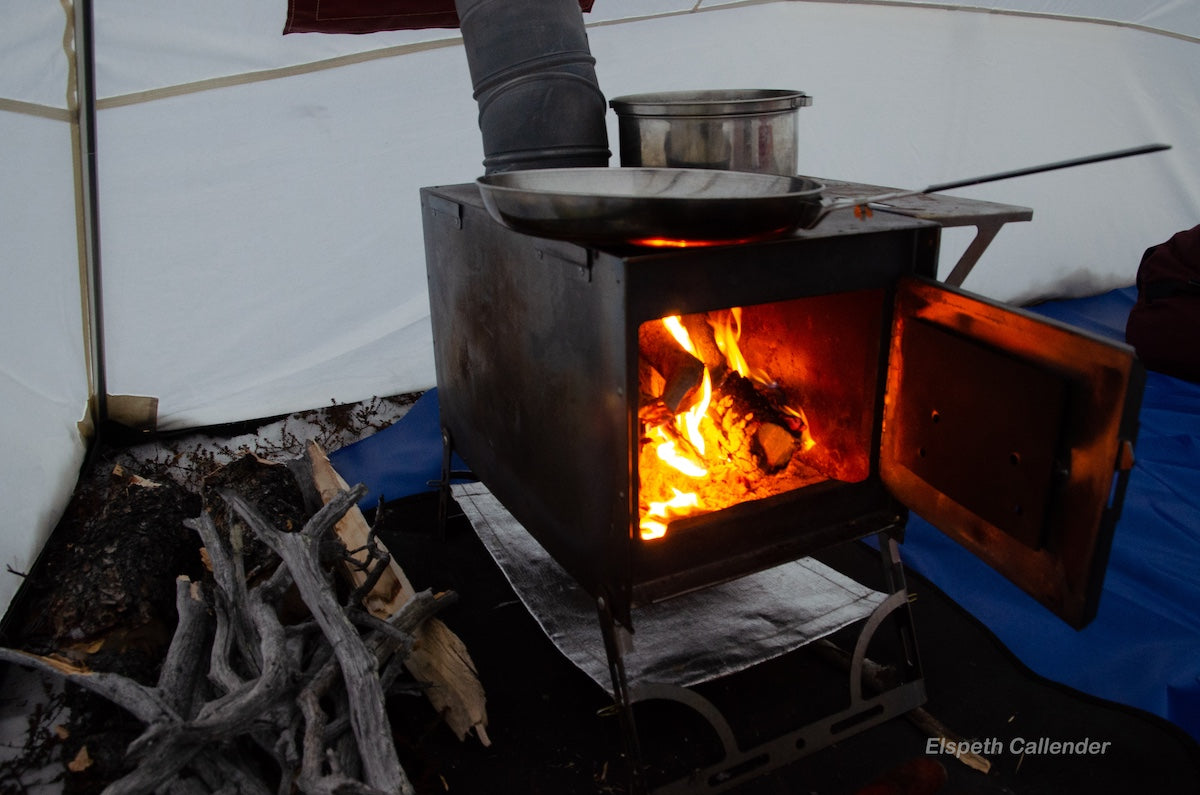
Our typical setup in summer and shoulder seasons when we feel the need for a full floor is a house wrap or a Tyvek tarp. They are light, waterproof and fairly durable, everything we look for when we are not set up on frozen ground or snow. Anytime we are using a ground tarp and we are setting up on dirt and not using snow to anchor the tent out we fold the snow skirt or sod cloth to the inside of the tent and place our ground tarp over it. This creates a nice seal between the base of the tent and the ground tarp with the added benefit of keeping mosquitos and other unwanted guests outside where they belong! If it's shoulder season and we might fire up a stove we will have a stove hearth and heat reflector in place like we do in the colder seasons. When we head out in the fall after the bugs die off and we know we are setting up on dirt we often just bring small tarps for our sleeping areas and leave most of the tent floor bare ground. We especially do this when we are base camping for a hunt or extended stay when we are coming and going from the tent and do not want to hassle with taking boots on and off all of the time. A little tarp to keep your socks clean when you put your boots on is all you really need in these situations. We run the stove with dirt underneath so we don’t worry about a stove hearth or heat reflector because we have no tarp to protect under and around the stove.
Winter is the season that, while not tricky, has the most considerations and variations on what to do for a floor in your tent. The ultimate goal of a flooring system in winter is light, compact, and slip resistant. We have tried many many different methods to achieve this and it is not an easy task and we may well never be done looking. Light and compact usually equals slippery; non-slip is usually bulky and heavy. Our current tarp material is more slip resistant than our previous material, lighter, and not too bulky when folded up. It is as close to a perfect material as we have found so far, and we are very pleased with how well it performs.
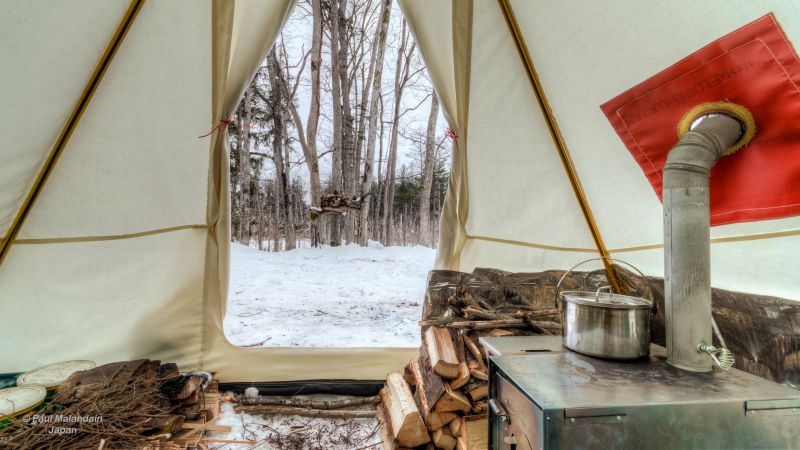
The two most common methods of using a ground tarp in the winter are the full floor or the partial floor. The full floor, as you may imagine, is a ground tarp that covers the entire inside of your tent. This is our preferred method in the winter. It does require the use of a stove hearth and heat reflector to protect the ground tarp from damage due to sparks, embers, and heat. The hearth protects the ground tarp from errant sparks and embers when tending the fire, and the heat reflector reflects the heat from the bottom of the stove up away from the ground tarp keeping us from potentially melting it from the heat as well as reflecting the heat into the space we are in and not the ground. Once that is set up we go in two directions. If we are not car camping we bring a small lightweight outdoor rug to place just inside the door of the tent to help minimize the amount of wet, and dirt at the entry way and make it a little less slippery. We have found over the years that the first step into a tent is made just a little nicer if you have a rug to step on to. It is a pretty minimal setup, but works well for us. If we were camping on ice, we would have to modify this with a little more insulation under the stove at least to minimize ice melt. A few people we know camp a lot on ice and have that dialed, and we would use a similar setup of foam squares to insulate the ice from the heat of the tent. When we camp close to the car all the comforts come out, which mostly consists of a few indoor/outdoor rugs we lay on the floor of the tent. They are bulky, but they make a very nice floor that is warm and dry for the trip, and are easy to clean in the spring. They also provide an added benefit of letting any spills and snow melt drain through to the tarp and just keep you a little drier and cozier.
The other option is to go with a partial floor. As the name implies a partial floor just covers a portion of the interior space of a tent. Typically just the rear portion of the tent will have a ground tarp and the front entry, wood storage, and cooking area will be left open to the snow. This is not a method we have used in winter, so we can’t speak much to it, but it is fairly common and does cut down on the weight of a ground tarp considerably. I would say that we see it more commonly used in Canada and by people moving every day as they travel.
After reading all of this you might ask, what system should I use? If you are just getting started we would recommend the full tarp, used in conjunction with a stove hearth and heat reflector. This is our tried and true setup. If you are camping close to your vehicle, throwing an indoor/ outdoor rug in your kit to go over the tarp is a great option. As you move along in your winter camping journey that base ground tarp you started with can become the waterproof layer you build your preferred tent floor system on. The beauty of a modular system like a Snowtrekker is that you are able to create a floor system that works for you and can be changed depending on time of year and conditions you are camping in, you can take just the amount of floor you need, and nothing more.